Ten days is exactly enough time to fall completely in love with Patagonia — and not quite enough to want to leave. This itinerary covers the absolute highlights of Argentine and Chilean Patagonia: the thundering Perito Moreno Glacier, the granite spires of Mount Fitz Roy in El Chaltén, and the jaw-dropping trails of Torres del Paine National Park.
We’ve designed this 10 days in Patagonia itinerary for independent travelers who want maximum adventure without wasted transit time. Whether you’re a seasoned hiker or a first-time visitor to South America, this guide gives you everything you need to plan a trip that’s both unforgettable and realistic.
Why 10 Days in Patagonia Is the Sweet Spot
Patagonia is enormous. The region spans over 1,000,000 km² across Argentina and Chile — larger than France and Germany combined. Trying to “see it all” in two weeks is a recipe for exhaustion and missed highlights.
Ten days, by contrast, lets you move at a pace where the landscapes actually sink in. You’ll spend enough time in each destination to hike the trails, feel the wind, and genuinely connect with what makes this place extraordinary.
Patagonia+ tip: If you have 14 days, add Ushuaia (3 days) at the start or Bariloche (3 days) at the end. Both are worth it if your schedule allows.
Essential Planning Before You Go
Best time to visit: October to April. Peak season is December–February, with the best weather but also the largest crowds and highest prices. March and April are our personal favorite months — the autumn colors are stunning and the trails are quieter.
Getting there: Most international travelers fly into Buenos Aires (EZE) and connect domestically to El Calafate (FTE). Alternatively, fly into Santiago (SCL) and connect to Punta Arenas if you’re starting from the Chilean side.
Crossing the border: This itinerary crosses from Argentina into Chile. The bus route from El Calafate to Puerto Natales takes approximately 5 hours and is the standard crossing. Border formalities are usually smooth — just don’t carry fresh fruit or meat.
Booking ahead: Torres del Paine refugios (mountain huts) and campsites book out months in advance in high season. Reserve as soon as your dates are confirmed. [AFF: Book Torres del Paine accommodation here]
Day-by-Day: Your 10-Day Patagonia Itinerary
Days 1–2: El Calafate & Perito Moreno Glacier
El Calafate is the gateway to the southern ice field and the natural starting point for this itinerary. The town itself is pleasant — a good selection of restaurants and gear shops — but the real reason you’re here is 78 km away.
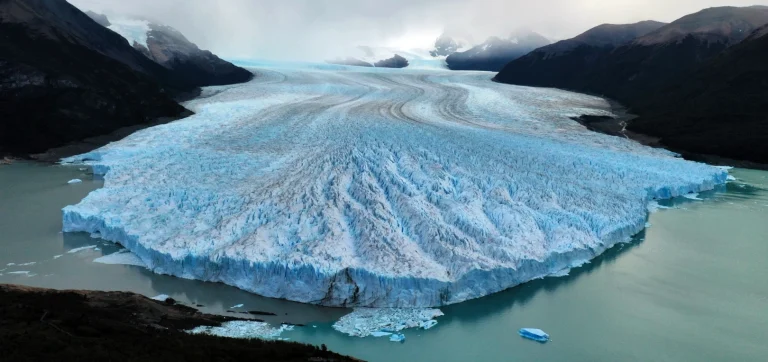
The Perito Moreno Glacier is one of the most remarkable natural spectacles on earth. Unlike most glaciers, which are retreating due to climate change, Perito Moreno remains in equilibrium, advancing at roughly two meters per day. The result is a 5-km-wide wall of ice, 60 meters tall above the waterline, that periodically calves with a sound like thunder.
Spend a full day here. The national park has excellent boardwalks that let you observe the glacier from multiple angles. If your budget allows, consider a mini-trekking tour that takes you onto the ice itself — crampons on, ice axe in hand, walking across a glacier that has been flowing for 18,000 years. [AFF: Book mini-trekking tour on GetYourGuide]
Day 2 alternative: Take the “Todo Glaciares” boat tour on Lago Argentino to see the Upsala and Spegazzini Glaciers. More remote, fewer tourists, equally awe-inspiring.
Where to stay in El Calafate: [AFF: Browse hotels on Booking.com]
Days 3–4: El Chaltén & Mount Fitz Roy
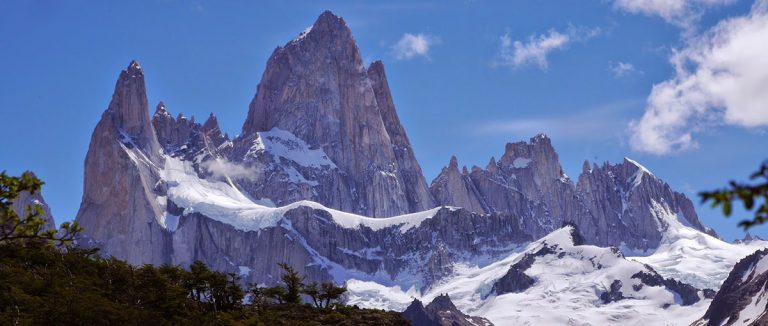
A 3-hour bus ride north brings you to El Chaltén, Argentina’s self-proclaimed “trekking capital.” The town sits at the foot of Mount Fitz Roy and Cerro Torre — two of the most dramatic rock formations on the continent. All trails in El Chaltén are free, well-marked, and accessible directly from town without any vehicle.
Day 3 — Laguna de los Tres: This is the signature hike, and it earns the title. The trail (21 km round trip, 700m elevation gain) climbs through lenga beech forests and across open ridges before delivering you to a glacial lake with Mount Fitz Roy rising vertically behind it. Start early. The last hour is steep, but the view at the top is worth every step.
Day 4 — Laguna Torre: A gentler alternative (18 km round trip) that takes you to Cerro Torre’s base, where the needle-thin granite spire is frequently capped in cloud. The trail follows the Río Fitz Roy and passes through some beautiful glacial terrain.
Patagonia+ tip: Rent trekking poles in town if you don’t have your own — the descents are steep. And pack lunch; the refugio at Laguna Torre is for overnights only.
Day 5: Transfer to Puerto Natales, Chile
This is a travel day. The bus from El Calafate to Puerto Natales takes approximately 5 hours, including the border crossing. Arrive in the afternoon with time to explore Puerto Natales — a small, characterful town that serves as the gateway to Torres del Paine.
Pick up supplies for the trek: snacks, sunscreen, any last-minute gear. Have dinner at one of the town’s excellent parrillas (Argentina-Chile rivalry aside, both sides do great lamb).
Where to stay in Puerto Natales: [AFF: Browse hotels on Booking.com]
Days 6–9: Torres del Paine National Park — The W Trek
The W Trek is named for the shape it traces through the park — four to five days of hiking through some of the most spectacular terrain on earth. These four days are the centerpiece of your Patagonia trip.
Day 6 — Valle del Francés: Start at Refugio Paine Grande (accessible by catamaran from Puerto Natales, [AFF: book catamaran here]). The French Valley is a glacial amphitheater flanked by hanging glaciers and sheer granite walls. Condors soar overhead. Allow 6–8 hours.
Day 7 — Glacier Grey: Walk west from Paine Grande to the Grey Glacier viewpoint. The blue-tinted ice of this sprawling glacier fills the horizon. Optional: kayak in front of the glacier for a completely different perspective. [AFF: Book Grey Glacier kayak tour]
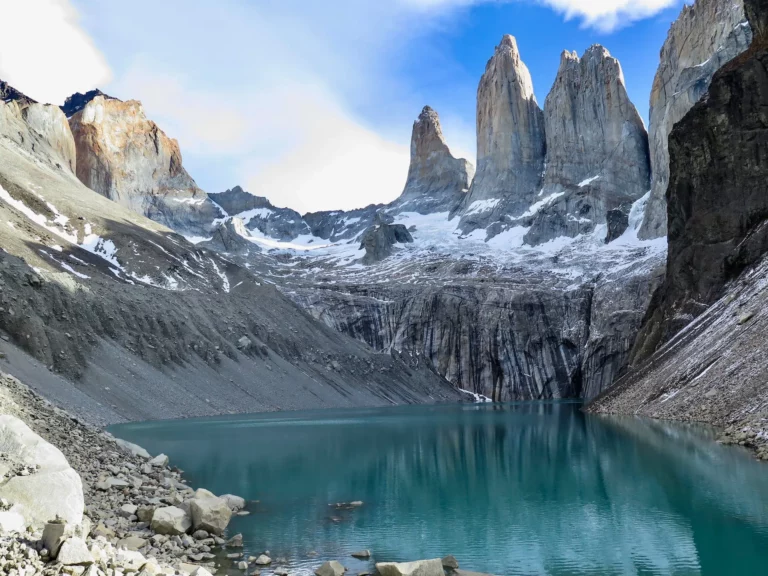
Day 8 — Valle del Ascencio & Las Torres: The final and most famous section. Leave Refugio Central before 6am to reach the Mirador Las Torres at sunrise. The base of the three granite towers, reflected in a turquoise lake, is the defining image of Chilean Patagonia. Allow 8–10 hours round trip.
Day 9 — Rest & Explore: Use this buffer day wisely. Options include a horse ride through the park, wildlife spotting (guanacos, condors, foxes, and — if you’re lucky — pumas), or simply sitting by Lago Pehoé watching the light change on the towers.
Booking refugios: Vertice Patagonia and Las Torres manage most accommodation inside the park. Book 3–6 months ahead in high season. [AFF: Book refugios]
Day 10: Puerto Natales & Departure
Return to Puerto Natales by catamaran or bus. If your flight allows, spend the morning at a café, buy some local artisanal products, and let the past nine days settle.
Most travelers fly out of Punta Arenas (PUQ), 4 hours from Puerto Natales by bus. Book a morning bus to arrive in time for afternoon flights.
Where to Stay: Our Recommendations
| Destination | Budget | Mid-range | Splurge |
|---|---|---|---|
| El Calafate | Hostel del Glaciar | Alto Calafate Hotel | Eolo Lodge |
| El Chaltén | Senderos Hostel | Los Cerros Hotel | Awasi Patagonia |
| Puerto Natales | Erratic Rock Hostel | Indigo Patagonia | Singular Patagonia |
| Torres del Paine | Camping Torres | Refugio Las Torres | Explora Patagonia |
[AFF: Browse all options on Booking.com]
Getting Around
- El Calafate → El Chaltén: Daily buses, ~3 hours, affordable. Book 1–2 days ahead in peak season.
- El Chaltén → El Calafate → Puerto Natales: Bus via border crossing, ~5 hours.
- Puerto Natales → Torres del Paine: Bus or catamaran. The catamaran is more scenic and faster.
- Within El Calafate: Taxi to the glacier, or rent a car for flexibility. [AFF: Car rental options]
- Within Torres del Paine: The park has a reliable “free bus” connecting main trailheads.
What to Pack
Patagonia is famous for its weather: four seasons in a day is not an exaggeration. Pack layers, always.
- Base layer: Merino wool (regulates temperature, resists odor)
- Mid layer: Fleece or down jacket
- Outer layer: Waterproof shell, windproof (this is non-negotiable)
- Footwear: Waterproof hiking boots, broken in before the trip
- Extras: Trekking poles, gaiters for muddy trails, sun protection (the UV is intense), buff/neck gaiter for wind
Frequently Asked Questions
Do I need a visa? Citizens of most Western countries (US, EU, UK, Australia) enter Argentina and Chile visa-free. Check your specific passport.
Is 10 days enough for the W Trek? Yes. Most people complete the W in 4–5 days. This itinerary includes a buffer day (Day 9) to account for weather delays or slower pace.
How fit do I need to be? The W Trek involves 6–10 hours of hiking per day on uneven terrain. Reasonable fitness is required — you don’t need to be an athlete, but you should be comfortable walking for extended periods.
Can I do this trip on a budget? Absolutely. Hostels, self-catering, and camping inside the park significantly reduce costs. The main expenses are flights and park entrance fees.
Start Planning Your Patagonia Trip
Patagonia rewards preparation. The more deliberately you plan — booking refugios early, choosing the right season, building in buffer days — the more the place opens up to you.
At Patagonia+, we’ve explored every corner of this region and are here to help you do the same. Browse our destination guides for deeper dives into El Calafate, El Chaltén, and Torres del Paine, or reach out if you have questions about planning your trip.
The wind will push back. Go anyway.