Darwin, Fitz Roy and the Yámanas: a misunderstanding at the end of the world
Picture the Beagle entering the Beagle Channel and two worlds staring at each other without understanding. Wounds came from that clash… and also a new idea of time.
I imagine the wind of the Beagle Channel hitting me in the face, icy and salty, and I see an English ship moving slowly between low islands and hills blackened by the smoke of campfires. From the rail, a 23-year-old young man writes everything down in a notebook: shapes of the clouds, colors of the rocks, gestures of the people he’s seeing for the first time in his life. On the other side, on the coast, a group of bark canoes approaches carefully. The Yámana, sea nomads since time immemorial, are also watching and taking notes, only they do it without paper.
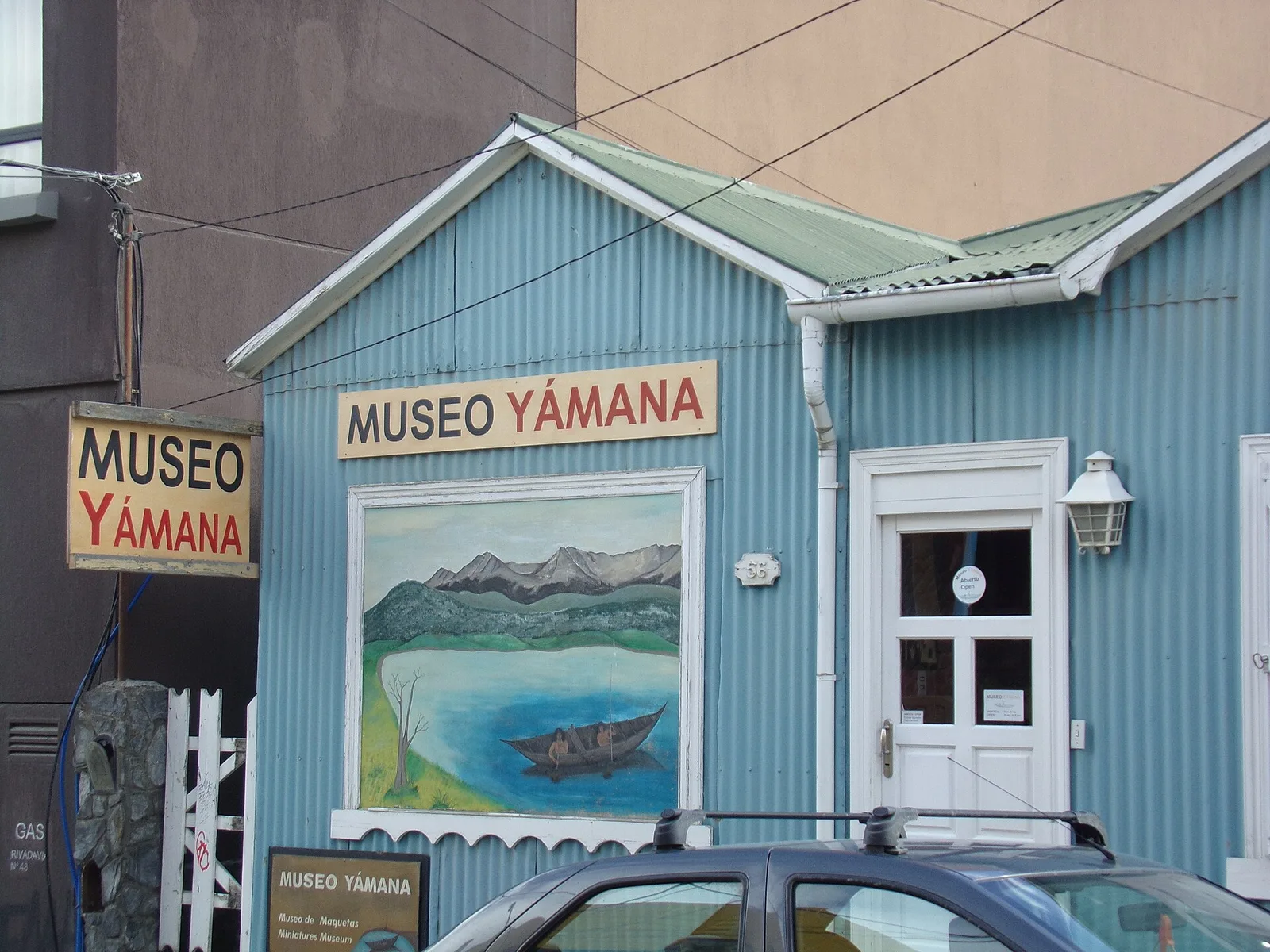
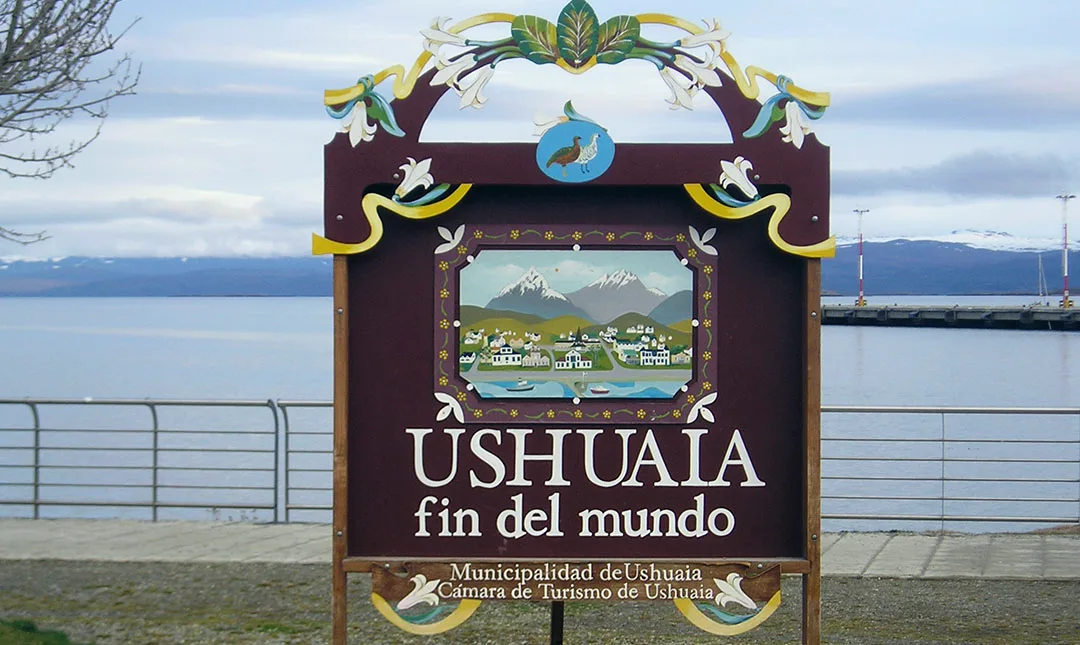
A long time after that scene, I ended up walking through Ushuaia myself and entering the Yámana Museum. In those rooms I saw the life of the Yámana native peoples on display, their culture before and after the arrival of the Europeans. They weren’t just display cases: they were the confirmation, in concrete objects and stories, that those people Darwin watched from the rail had a long, complex, and unique history, which kept beating beneath every label and every piece.
That crossing of gazes, in December 1832, was not a “simple” encounter for anyone: there was fear, curiosity, and gestures that were misinterpreted; words and codes that did not match. Out of that discomfort came two very different things: on the one hand, a deep wound in the life of the Fuegian peoples; on the other, some cracks in Charles Darwin’s certainties about what it means to be human.
And there, in that frozen corner of the map, something began to shift in the way we understand life.
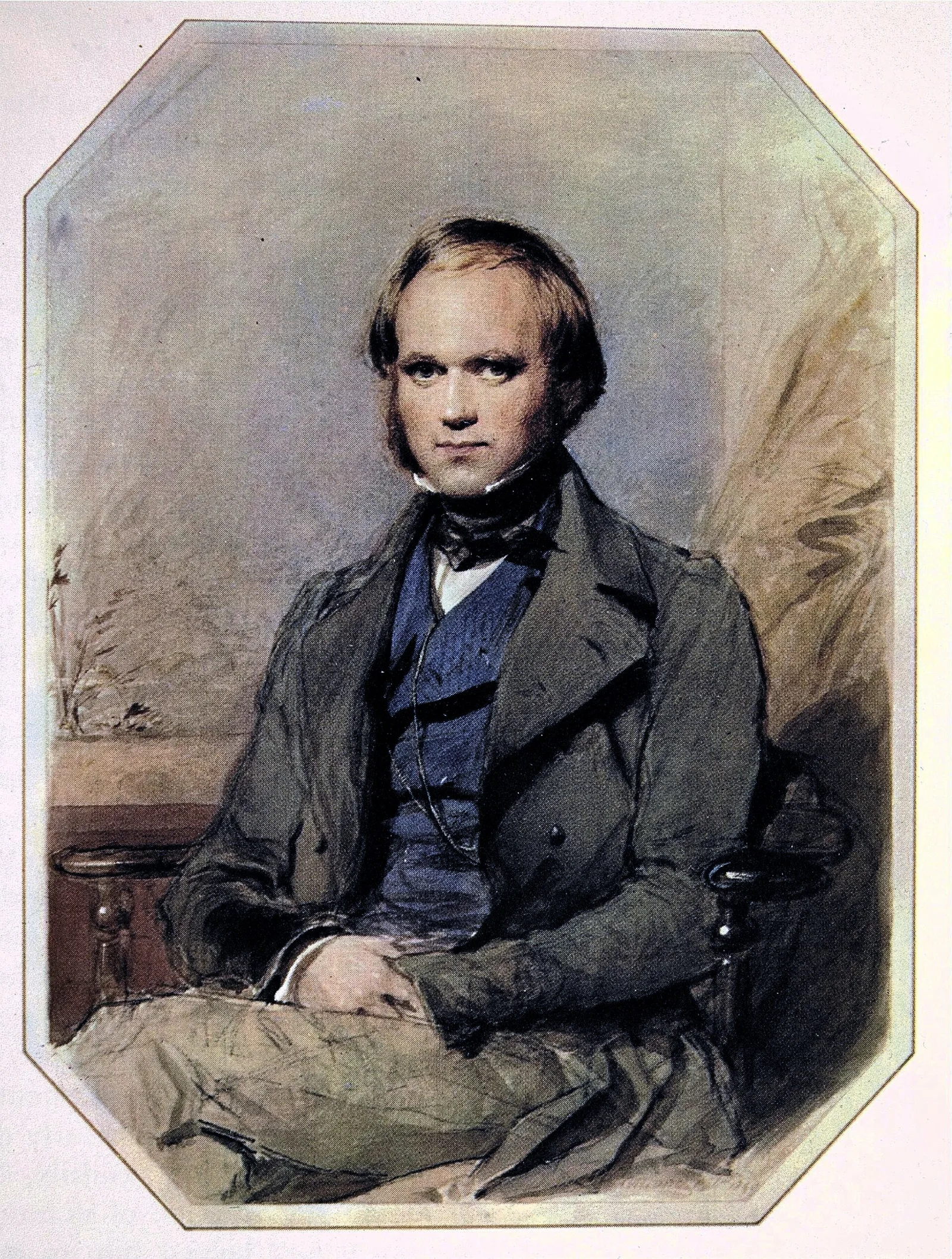
Portrait of Charles Darwin. Photo: George Richmond, Public domain, via Wikimedia Commons.
On deck: a plan that was about to crash into reality
At the end of 1831, the English naturalist Charles Darwin set sail for South America on the HMS Beagle, a small Royal Navy ship commanded by Robert FitzRoy. The official objective was technical: to complete hydrographic surveys along the coasts of Patagonia, Tierra del Fuego, and other stretches of South America. But the sea and the people had other plans: the European idea didn’t fit with those coasts.
This second voyage of the Beagle sailed from Plymouth on December 27, 1831, and went down the Atlantic: Canary Islands, Cape Verde, Salvador de Bahia, the coast of Brazil, it passed through the Río de la Plata estuary, with stops in Montevideo and Buenos Aires, before continuing south to the cold channels.
In Tierra del Fuego, encounters with different groups became an uncomfortable laboratory for Darwin’s ideas. There he began to notice that the supposed abysmal distance between human beings and the rest of the animals, or between different human peoples, did not fit so well with what he was seeing. Later, his observations of plants, fossils, and animals throughout the region would feed his evolutionary thinking, but in these southern channels something deep was already stirring.
There is a key fact that came from before. Two years before taking Darwin on board, in 1830, the young FitzRoy had made a decision that chills our blood today: after a Beagle boat was stolen, he ordered four Fuegians to be captured as “hostage and guarantee.” He gave them English names —Boat Memory, York Minster, Fuegia Basket, and Jemmy Button, whose original name was Orundellico— and took them to England with the idea of “civilizing” them and educating them as future intermediaries. Boat Memory died there, sick, far from his land.
When the Beagle set sail on this second voyage, FitzRoy was not only bringing maps and a curious naturalist. Also traveling were those three Fuegians who had been in England —dressed in European style and with some English— and an Anglican missionary determined to found a mission in the Beagle Channel. In FitzRoy’s mind, the scheme seemed orderly: bring them back transformed, have them be an example and a bridge with their people, and thus “raise” an entire people. It’s a kind of social and religious experiment traveling compressed inside a small ship, on its way to the end of the world.
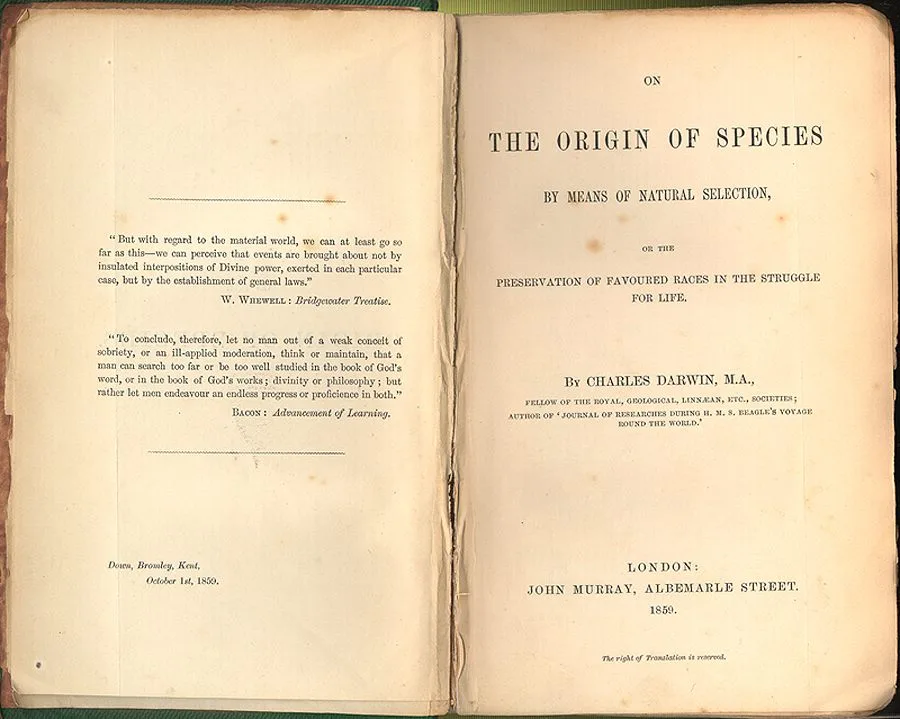
Origin of Species. Photo: Unknown author, Public domain, via Wikimedia Commons.
When the shout became an incomprehensible language
The chronologies of the voyage place the Beagle’s first arrival in Tierra del Fuego within a handful of days in December 1832: some sources mention the 16th, others the 17th or 18th. We’re not going to settle that discussion from this desk, but we can hold on to the scene Darwin describes in his journal when the ship enters Good Success Bay.
Imagine yourself leaning on the rail, notebook in hand, after weeks of Patagonian coastline and open sea. The wind cuts as if someone had left the planet’s air conditioning on maximum cold. The sky has that uneven austral summer light: low clouds, patches of sun on the hills, a bright gray over the water.
Suddenly, on a rocky point, dark silhouettes appear. They are Fuegians coming out of the forest, standing on the coast and, as the ship passes, they jump, wave their worn-out capes, and let out a loud shout. Darwin notes that it was “without exception the most curious and interesting spectacle” he had seen so far. At the same time, he writes that the distance he perceives between those “savage men” and the “civilized” seems greater to him than that between a wild animal and a domesticated one.
Read that again and pause for a second. On one hand, there is sincere fascination; on the other, a very harsh comparison. Darwin is trying to process what he sees with the categories of his time: a scale of humanity, where some peoples would be “more advanced” and others “more backward.” What’s striking is that, in the midst of those judgments, he also mentions the enormous capacity for change he intuits in all people, something that would later be central to his way of thinking.
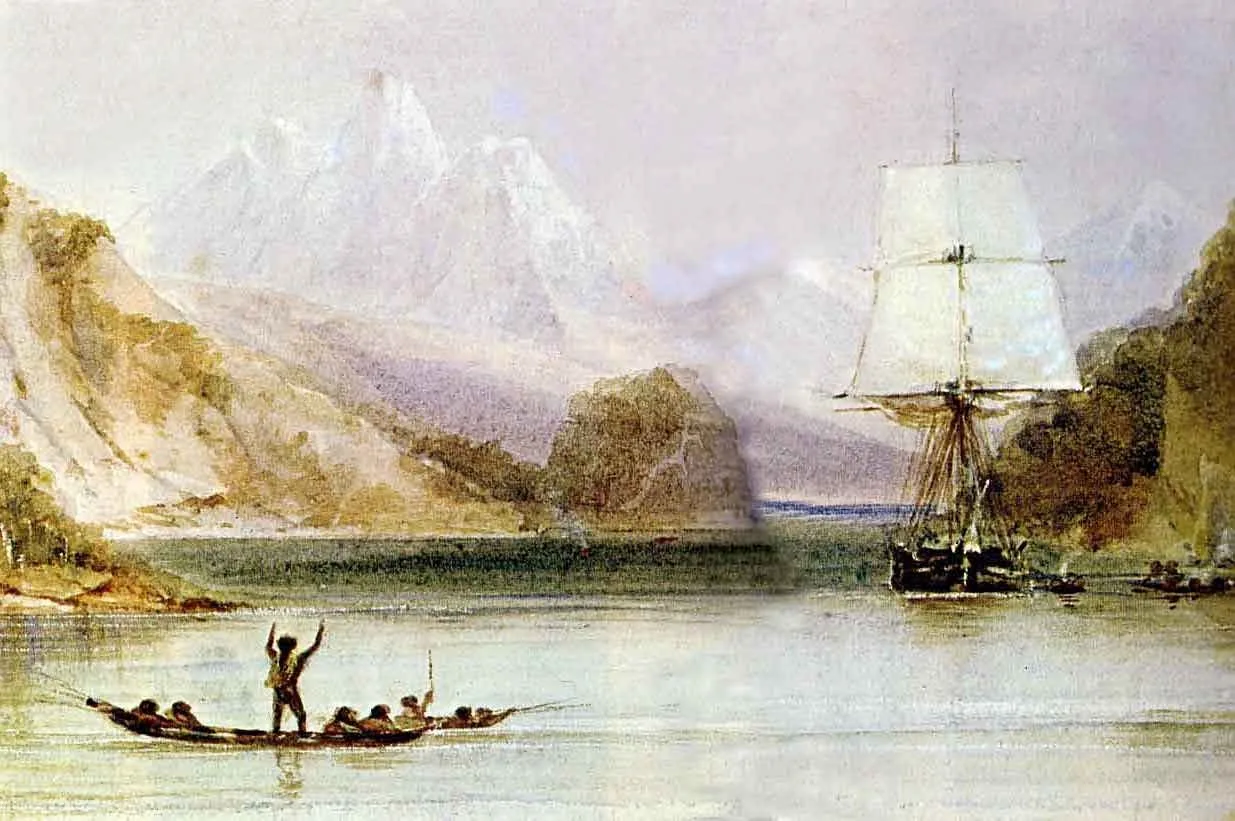
From the coast, that scene surely felt different. The Yámana, nomadic canoe people, had been moving through those waters and the islands south of the Isla Grande for thousands of years, reaching as far as the Cape Horn archipelago. Their life revolved around bark canoes, shaped, according to European witnesses, “like a Venetian gondola.” They hunted sea lions, fished, gathered shellfish at low tide.
What they are seeing now is not “a curious spectacle,” but a huge, unknown object bursting into their space: a dark hull, sails, cannons, men wrapped in thick woolens who look at them as if they were part of the landscape. The shout, the fluttering cloaks, the canoes that approach with caution: all of that is language, unfortunately almost no one in the Beagle was able to understand it.
Shortly after that first coastal contact, in January 1833, FitzRoy’s experiment entered its most delicate moment. The Beagle headed into the Beagle Channel— that corridor of water that runs from west to east along the south of the Isla Grande— and veered off into a channel that opens at a right angle to the south, known as Ponsonby Sound. There they planned to settle Jemmy Button, Fuegia Basket, York Minster and the missionary.
FitzRoy equipped four boats, loaded tools, seeds, domestic animals, European clothes. The idea was to set up on the coast a kind of permanent village, with vegetable gardens and a chapel, in a territory accustomed to constant movement. The landscape contradicted that fantasy of order from the outset: soaking slopes, dense forest, smoke from campfires mixing with the mist, slippery rocks covered in seaweed.
Darwin observed the contrast with a level of detail that shows in his texts. On one hand, the nomadic Yaghan groups, who set up light shelters near shellfish beds, moved following the tides, the women dove in summer and winter to gather shellfish and “sea eggs” or stayed in the canoes fishing with fine hair lines; the men, meanwhile, took care of hunting and other fishing tasks. On the other, that small improvised colony with iron tools, heavy clothing and a sedentary lifestyle scheme imported from England.
In the middle of all this, Jemmy Button appears as the uncomfortable bridge between two worlds. He had been taken when he was a teenager; now he was a young man who could move between two languages, but neither was enough to fully explain what it meant to be torn from his territory, cross the ocean, live in England and return years later to these channels with an assigned role. The sources do not quite agree on how his life went on: some emphasize how much he resumed Yaghan practices and his bond with the land and sea; others highlight that he continued using the English name Jemmy Button. What they do share is the sense of a split identity, of having to inhabit an uncomfortable frontier between London and the Fuegian islands.
In the midst of these attempts at contact, scenes appear that from today’s perspective seem almost absurd. In a later account it is told that Darwin, wanting to be kind, offered a small gift to an old Fuegian man. The man, as a gesture of courtesy, patted his chest while making a sound similar to the one used to call chickens and then bared his torso, expecting Darwin to do the same. Two people trying to express respect, each from within his own code, and an abyss of misunderstandings in between.
Meanwhile, the mission plan kept building up problems. The diseases that traveled with the Europeans, the conflicts, the resistance of many Yámana to abandoning their mobility and staying in a fixed place, the poor suitability of that village model to an environment of cold channels and scattered resources… everything pushed against it. Historical reconstructions agree that the mission attempt in the Beagle Channel area ended up being abandoned and that the efforts to establish a stable settlement were marked by failure and by very harsh consequences for the local communities.
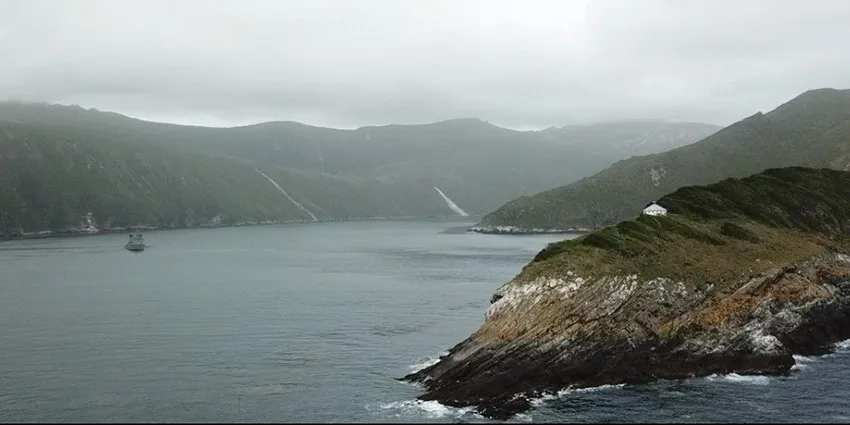
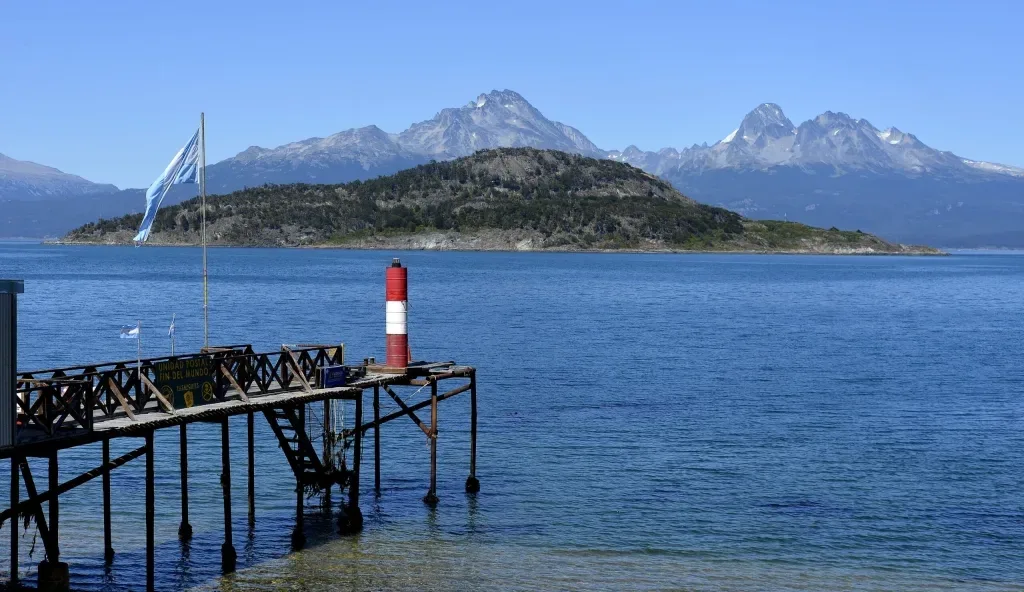
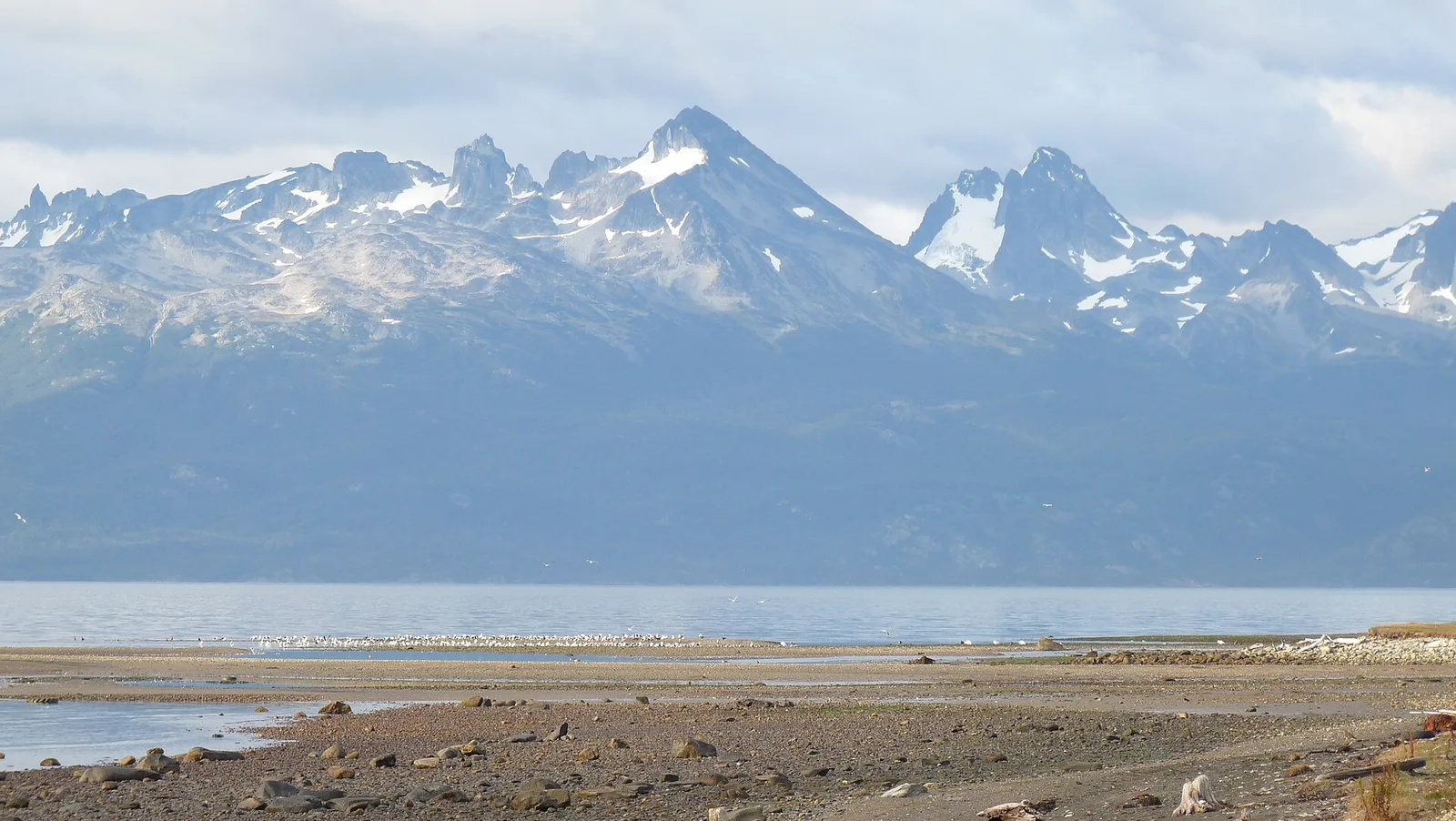
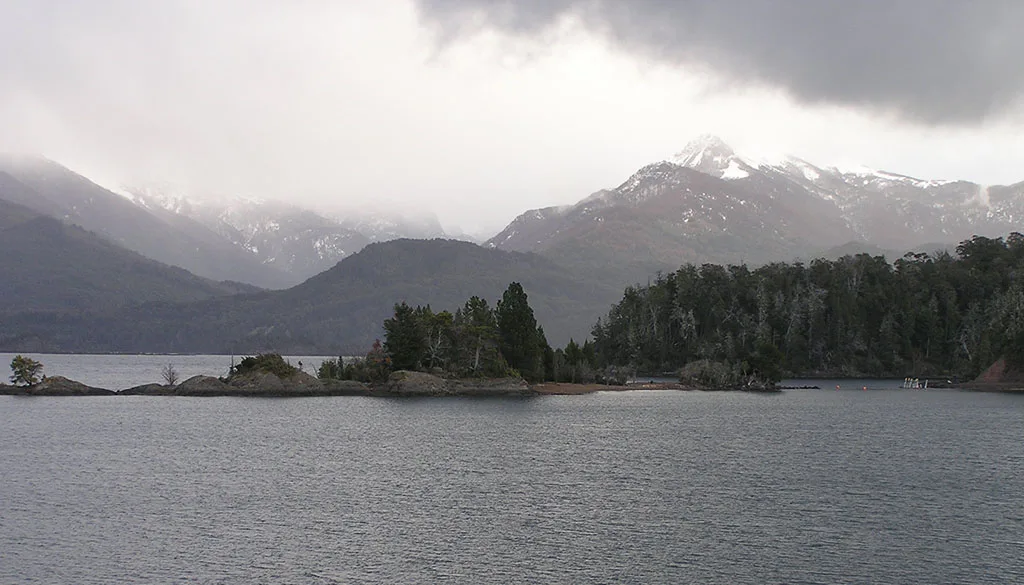
Chilean coast seen from Tierra del Fuego with snowy peaks over the Beagle Channel. Photo: Ayi.funes, CC BY-SA 4.0, via Wikimedia Commons.
The other shore: what they called themselves
When we read Darwin’s diary, we almost always see a single camera: that of a brilliant and curious young Englishman, but shaped by the prejudices of his time. To balance the picture, the camera needs to swivel toward the coast.
the Yámana call themselves by that word, which means “man,” while “Yagán” or “Yaghan” is roughly equivalent to “we” in their language. Their traditional territory includes the islands located south of the great Fuegian island and extends to the Cape Horn archipelago. They are often described as the southernmost Indigenous people on the planet. Long before the map marked “Beagle Channel,” those waters were for them a network of routes and stories.
Before the missions and colonization, Yámana life was organized around the sea: carefully made bark canoes, sometimes from the bark of a single bent trunk, simple shelters built on the coast near shellfish beds, frequent movements between different bays. The economy was flexible and based on fine-grained knowledge of the territory: sea lion hunting, fishing, shellfish gathering, exchanges between groups.
In the mid-19th century, the arrival of religious missions, the creation of modern state borders, and colonization transformed that world. The sources speak of profound changes: pressure to abandon nomadism and concentrate in fixed settlements, alteration of diet, loss of access to key hunting and gathering areas, epidemics that decimate the population. The demographic and cultural impact was devastating.
And even so, some traces resist. A modern work documents that, in 1873, Fuegia Basket visited a mission settlement in the Beagle Channel and still kept vivid memories of London, of FitzRoy and of the Beagle. That memory, decades later, shows that the journey north was not just an anecdote for a scientist’s journals, but a deep mark in the biography of a Yagán woman.
Today there are Yagán/Yámana descendants and communities in both Chile and Argentina. In different cultural projects, practices such as basketry, certain oral stories, even the construction of bark canoes or sea lion leather canoes are being recovered, now often linked to tourism and education. If you arrive via Ushuaia or Puerto Williams, the most common thing is to fly and then combine routes and boats; you’re going to run into boat tours, short sailings and visits to protected areas. Think of it as a way of understanding the place at its real scale. If you sharpen your gaze, you can also look for those spaces where the long history of the channel is told and of those who inhabited it long before the Beagle appeared.
Every time I remember my visit to the Yámana Museum, I go back to those display cases with everyday objects, tools and recreations of canoes and shelters. There it becomes clearly felt that the Beagle Channel is not just a cold postcard with snow-capped mountains, but a stage where very different memories intersect: the European travel journals, the Yámana voices that the museum tries to recover, and our current gaze, which arrives with its own ideas and prejudices.
HMS Beagle in the seas of Tierra del Fuego, painting by Conrad Martens made during the voyage of the Beagle (1831-1836). Photo: Conrad Martens (1801 - 21 August 1878), Public domain, via Wikimedia Commons.
From the channel to the notebook: when reality dismantles ideas
In his texts on Tierra del Fuego, Darwin goes so far as to state that in that region the human being is found, according to him, “in a lower state of improvement” than in any other place he knows. It’s a phrase that pains us today, written with the certainty and the limits of an Englishman from the 1830s. But in those same pages he also records the capacity for learning, adaptation and change that he sees in the people he interacts with.
The contrast that impresses him so much —between the groups he observes from the ship or on the coasts and the three Fuegians who return from England baptized, clothed and literate— sends him a message that, although he doesn’t put it that way, gradually erodes certain certainties. If someone whom he places at the “lowest” end of that scale can learn another language, move about a major European city, and then reintegrate into their original environment, then the difference cannot be fixed or essential. It has to be shaped by history, by circumstances, by the environment.
There, still far from writing about natural selection, Darwin is seeing up close how environmental conditions and experience transform living beings, including people. The Beagle doesn’t just draw maps along the coasts of Patagonia and Tierra del Fuego; at the same time, it is sketching in his notebook the idea that nothing is completely static. Not species, not cultures, not the hierarchies that Europe considered obvious.
And, even if he didn’t fully perceive it, the Fuegian peoples gave something enormous back to science: the living, uncomfortable and concrete proof that humanity does not fit into a single definition.
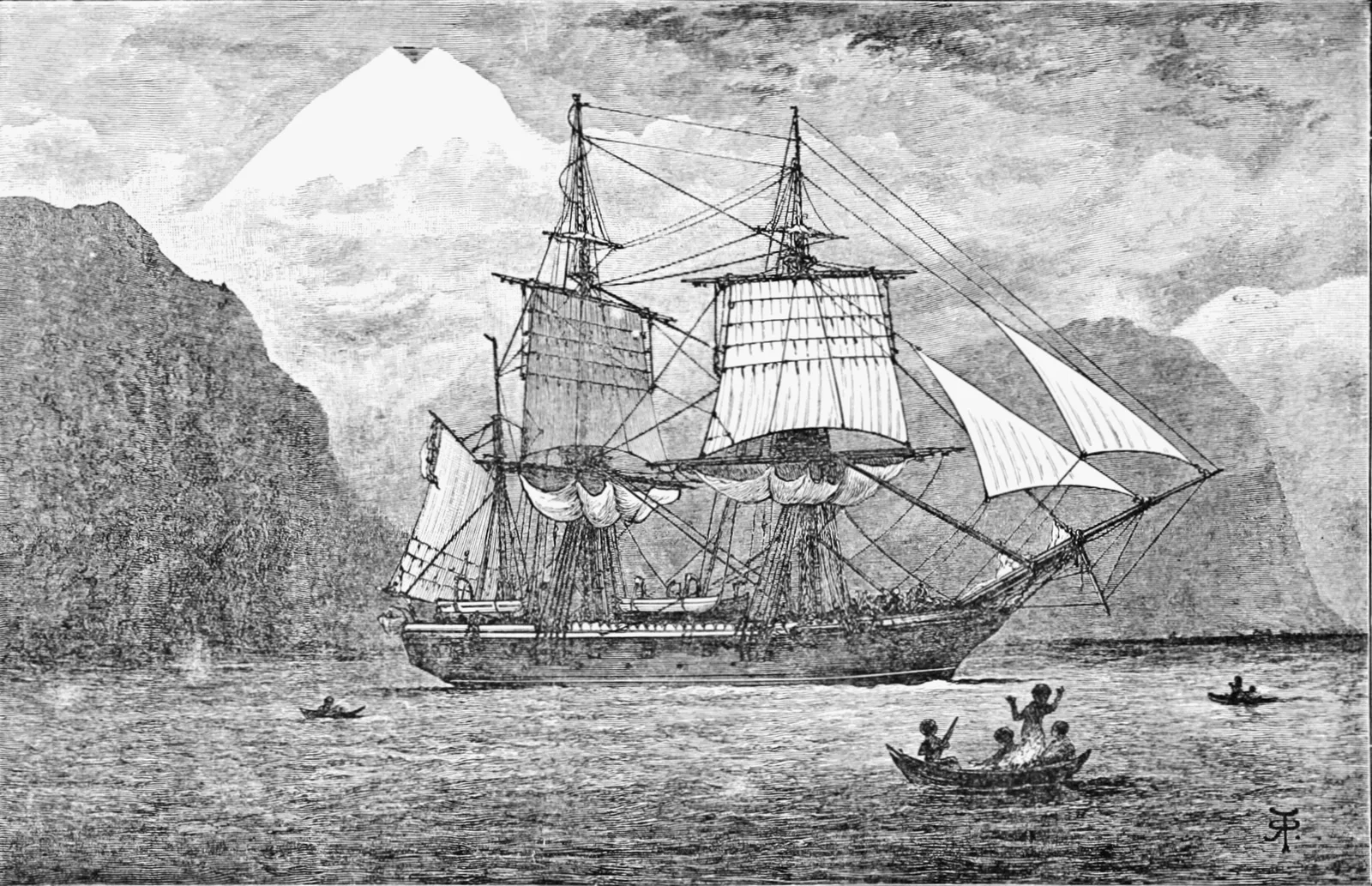
PSM V57 D097 Hms beagle in the straits of magellan. Photo: R. T. Pritchett, Public domain, via Wikimedia Commons.
What this journey still asks of us
Perhaps the strongest lesson from this episode is not Darwin’s individual brilliance, but something more difficult and more fertile: the ability to let reality contradict us, even if it makes us uncomfortable. FitzRoy arrived with a closed plan and a social experiment set up in his head; life dismantled it. Darwin disembarked thinking in terms of “savages” and “civilized” people; the doubts that were born there helped, years later, to change biology forever.
If you ever sail that channel, do it with that in mind: the Yámana, despite epidemics and dispossession, continued to care for their memory and their bond with the sea. They left us much to learn. Start today because the future arrives fast and life won’t wait for you. All it takes is to start.